





Green Bridesmaid Dresses: How to Make a Popular Wedding Colour Feel Personal
Green bridesmaid dresses have been doing the rounds for a few seasons now. Sage in garden marquees. Forest green by candlelight. Olive, moss, emerald, deep teal—they all get a turn. And you can see why. Green plays nicely with flowers, holds up in photos against stone or leaves, and can swing relaxed or formal depending on the shade and fabric.

So it’s fair to wonder: if every wedding seems to be green, will yours just blend in?
Not if you make it yours. A colour only starts to feel generic when you follow the formula. A forest green dress can look calm and natural with cream flowers and loose linen. Put it with dark velvet, brass candlesticks and winter foliage, and it turns dramatic. Same colour. Different choices.
It’s not the green itself. It’s everything you put with it. So before you order swatches, work out how you want the colour to feel. That’s your real starting point.
Start with a reason, not a shade name
You’ve probably got a screenshot saved somewhere. Sage dresses, eucalyptus, ivory roses. It’s a lovely look. But it can also box you in before you’ve made a single decision.
So before you get stuck into sage vs olive vs forest, ask yourself what you actually want the colour to do.
Maybe you want your bridesmaids to feel at home in a garden—without vanishing into the flowerbeds. Maybe you want something rich for an evening do, but softer than black. Or maybe green means something to you. A place you love. A family garden. A piece of jewellery. Or it just makes your friends look good. That’s allowed too.
That reason helps when you’re staring at twenty nearly identical swatches. Bright emerald looks amazing on a screen. In a quiet ceremony? Maybe not. Pale sage suits the venue, but it can wash out in a dim room or next to very pale flowers. Olive or moss often holds its own while still feeling natural.
You don’t need a deep sentimental story. If you just love green, that’s fine. Just work out what you want it to say before you copy a trend.
Pick a green that suits the venue you actually have
Green isn't just one colour. It's a whole range, and each one behaves differently depending on the room you're standing in.

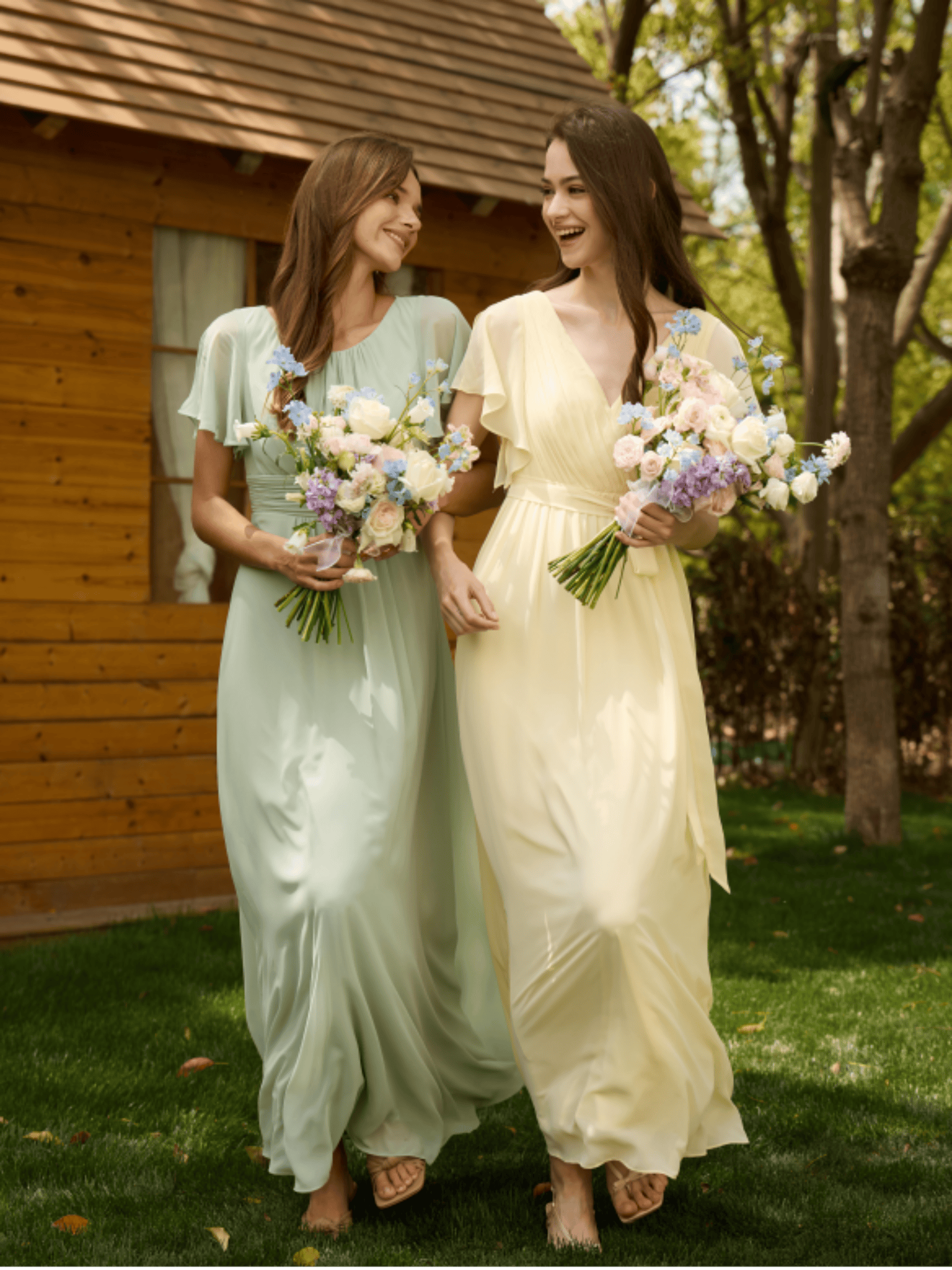
Sage is the quiet one. Soft. A bit grey. Understated, which is exactly why people like it.
Daylight suits it—pale stone, light wood, loose flowers from the garden. That's where it looks its best. But contrast is its weak spot. Stick it in a dark reception room, or on someone pale holding a pale bouquet, and it just fades away.
So if you've got your heart set on sage for an evening do, give it something to push against. Olive foliage. Warm metallics. Or a deeper green tucked into the flowers.

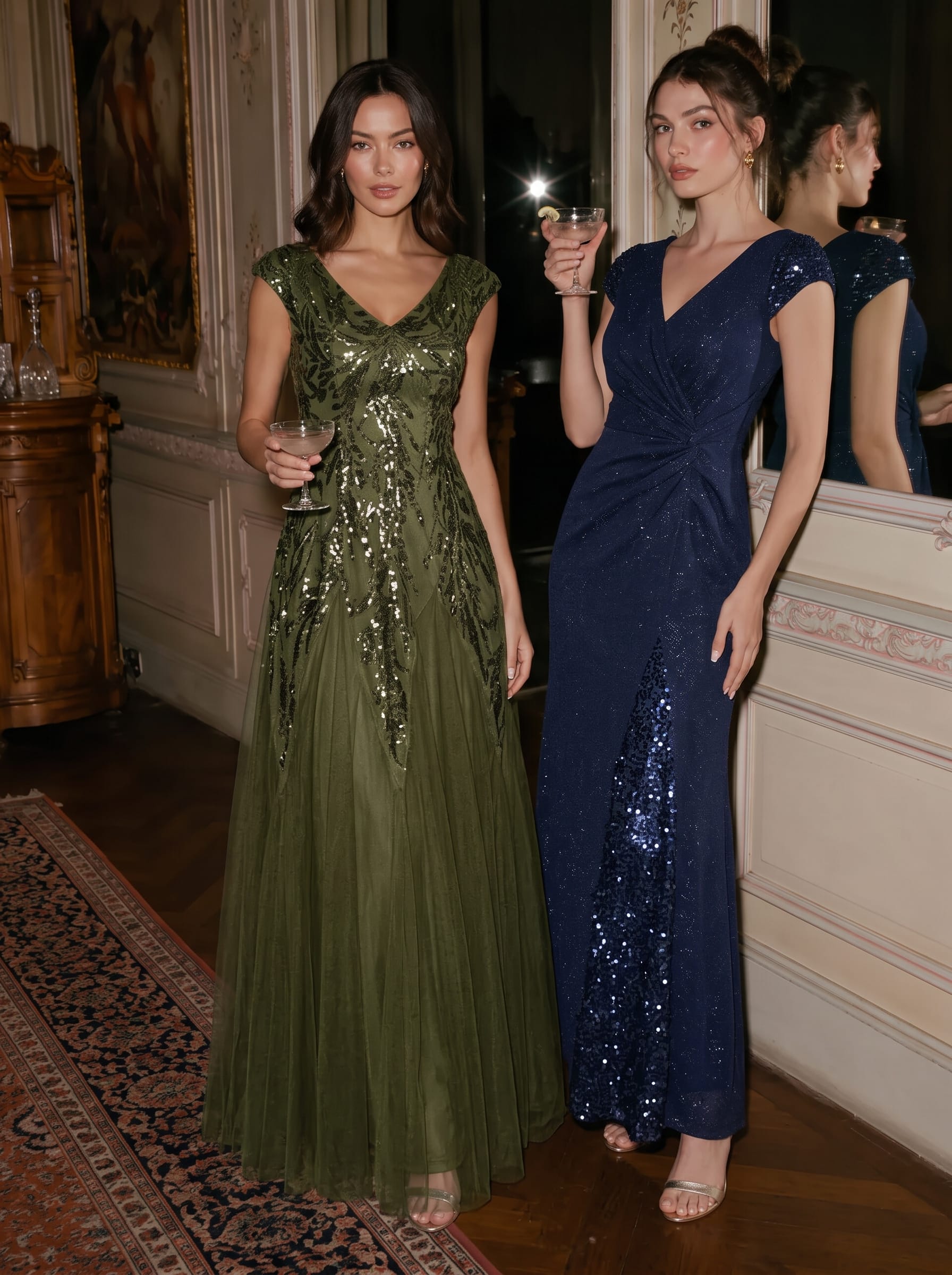
Olive and moss are warmer than sage. Earthier. I’d wear them to a relaxed venue—a barn, a pub garden, late-summer flowers. But relaxed doesn’t have to mean scruffy. Satin olive with a simple gold necklace? Properly smart. In chiffon, the same colour feels far more casual. These are the greens to pick if you want it to look deliberate. Not like you’re trying to match the hedges.

Forest green and deep green aren't shy. They've got presence. Late-afternoon weddings, evening dos, rooms with dark walls and warm lamps—that's where they feel at home. And they come out well in photos. No wonder they're still a favourite.
The catch? If everything around them is dark too, it all goes heavy. Deep green needs light somewhere. Texture. Or just a bit of empty space in the photo.

Emerald and deep teal. Cooler. Clearer. These two don't blend in—they're for when you want the colour to be noticed.
Beautiful for formal weddings. But be careful with the rest. Bright green plus saturated flowers plus shiny shoes plus sparkly jewellery? Too many things competing. Let one element be the statement. Not five.
Lighting matters more than you think. A green that looks refined in daylight? Can turn almost black at night. One that looks dull on your phone? Can look much brighter across a full skirt.
So take your swatches to the venue if you can. By a window. Under the warm indoor lights. Next to the suit fabric, the stationery, the flowers. That's how you'll actually know.
Don't match everything. Just make it look deliberate.
Worried your bridesmaids will look like they've been copied and pasted? Then don't treat the dresses like a uniform.
Matching is fine. Identical isn't the only way to look like you belong together.
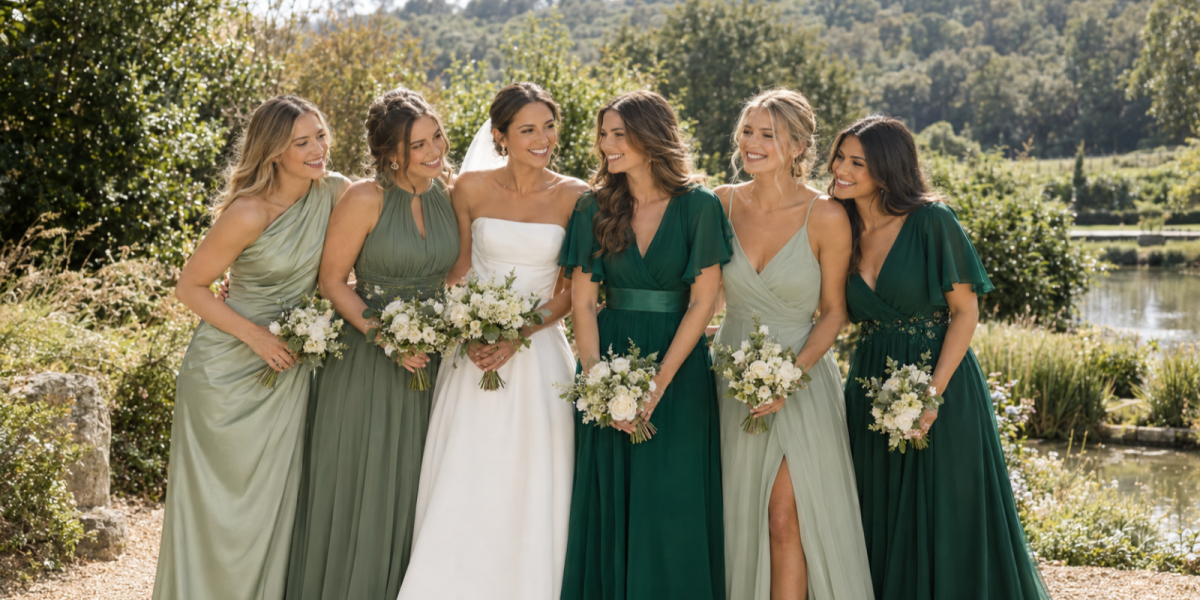
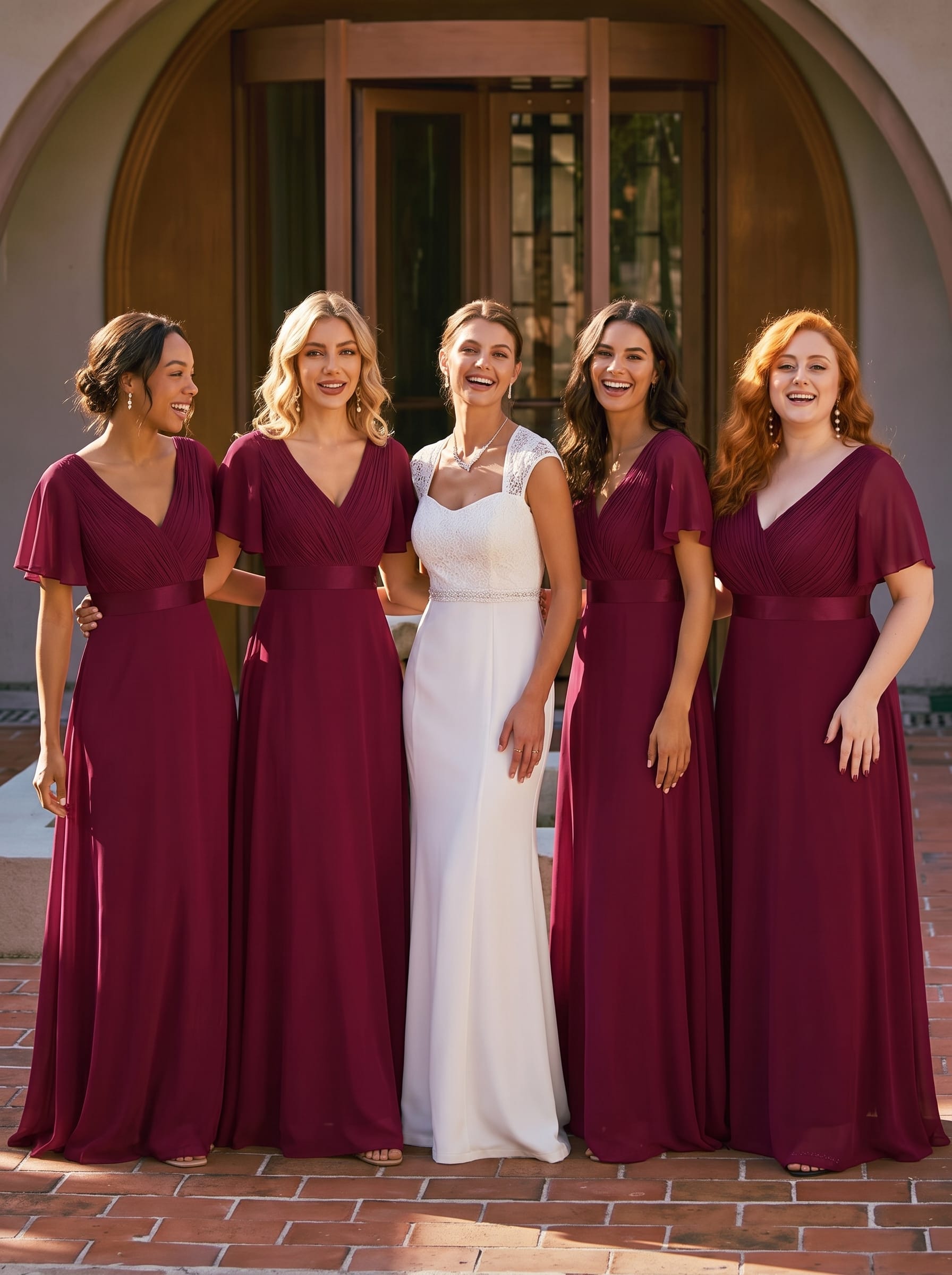
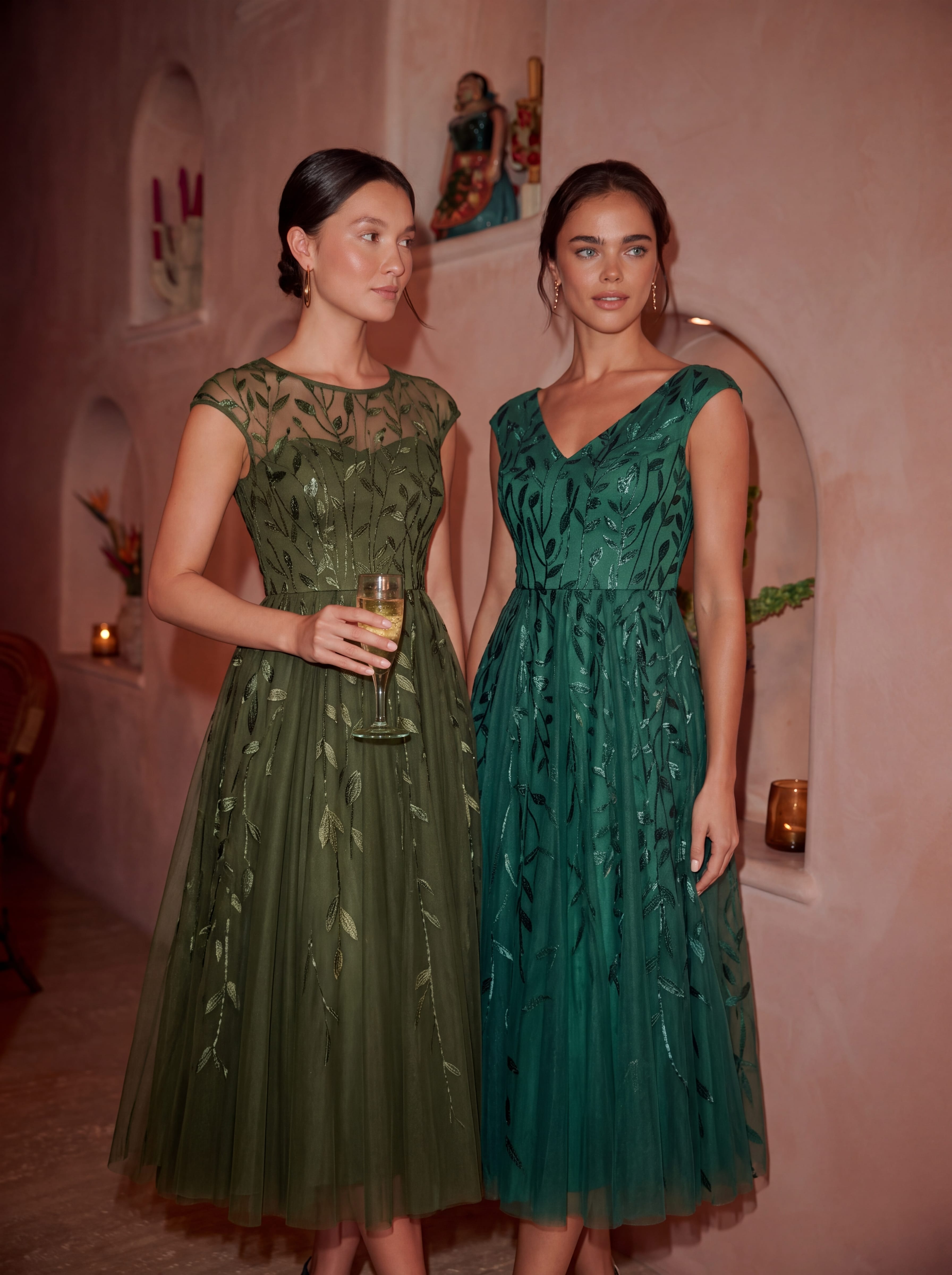
Keep one thing fixed. Change one thing on purpose. Same dark green satin, different necklines. Or one shape in three close greens—moss, olive, forest. That gives you depth. And it won't look accidental.
What fails? Telling everyone to "just pick any green." One turns up in blue-emerald. Another in yellowy olive. Someone else in pale sage. All lovely dresses on their own. Together? They fight. The photos end up looking like a collection of outfits, not a colour scheme.
Mixed greens? You need a few ground rules.
Start by picking three or four shades. Not the whole green spectrum—that way lies chaos.
- Keep the fabric the same if you're mixing colours. Satin, velvet and chiffon catch the light differently, so blend all three and your greens will drift apart. More than they actually are.
- Same goes for length and formality. A floor-length satin gown next to a casual midi chiffon number? That's a bigger problem than the colour. Trust me.
- Then find one thing to tie it all together. Same bouquet style. Same gold or silver finish. Same wrap. That's what stops it looking like five separate outfits.
The nice bit? Everyone gets to choose a shade that works for them. Forest green looks incredible on one person. Olive or deep teal might suit another much better. Putting a bit of thought into a palette beats forcing your best mate into a colour that makes her feel awful.
Flowers should contrast, not camouflage
Forget which flowers “go with” dark green. Almost all of them do. The real question is what you want them to do in the photos.

If the dresses are dark and the bouquet is all dark leaves and burgundy blooms, it’ll look lovely up close. From a distance? A blur. You need something lighter—cream roses, white ranunculus, pale anemones, lighter foliage. Doesn’t have to be a whole bouquet of white. Just a few lighter stems. That’s enough to stop it looking like one dark lump.

Warm greens—olive, moss—work with butter yellow, faded peach, warm ivory, muted terracotta. Cooler greens—forest, emerald—look better with pale blue, soft mauve, silvery foliage. Love burgundy or berry? Use it as a pop, not the whole bunch. Dark green and dark red is rich, but without a lighter note it goes flat.
Season matters too. Summer: loose stems, lighter leaves, more movement. Keeps deep green from feeling too formal. Winter: deeper foliage, seed heads, a bit of warm metal. Still needs a pale bloom or some texture. The point isn’t to match the bouquet to the dress. It’s to make both stand out.
Let accessories set the tone
There’s no rulebook for what to wear with dark green. Gold, silver, nude, black—all fine. It’s more about whether the finish works with the dress or against it.

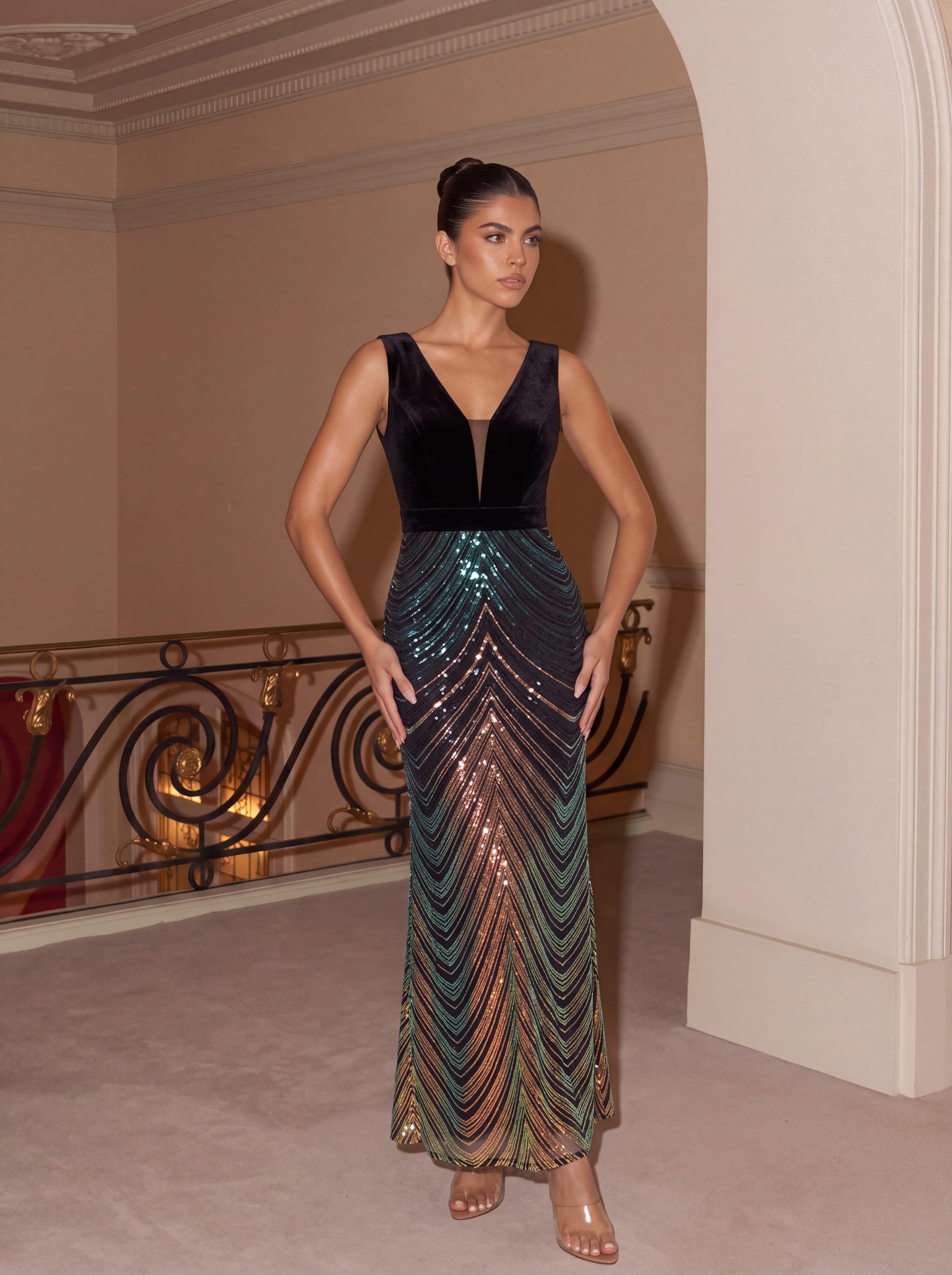
Gold brings warmth to dark green. Forest, olive, any shade really. It’s particularly good with satin or velvet, and for evening weddings. But keep the finish soft—brushed gold, champagne, that sort of thing. Not full-on sparkle. Glittery shoes and a sparkly bag alongside velvet? Overkill. Velvet’s already rich enough. So pick one thing that catches the light. Just one.
Silver goes with cooler greens—emerald, teal, blue-green. In a modern venue, it sharpens dark green up. If silver feels too cold on your skin or against the dress, pearls are a good swap. They soften things without introducing another colour.
Nude shoes are the easy win for bridesmaids. Each person picks a tone close to her own skin. That way the dress stays the focus, and the shoes actually get worn again. Much better than forcing everyone into the same beige pair—which never looks neutral on all skin tones anyway.
Black gives you a clean line. Works with dark tights, black tailoring, or an evening do. Especially handy when the hem is long—the shoe only flashes as you walk. If the dress is short or midi, black works better when you echo it somewhere else. A small bag. A belt. The groom's accessories. Otherwise the shoes look a bit stranded.

Pink shoes with green? Not automatically a no. It's about proportion and finish. Neon pink satin heels with a dark green velvet dress is a lot—one is high-shine and high-contrast, the other is deep and light-absorbing. The outfit ends up looking split in two. If you want pink, go dustier. Rose. Berry. Or just use it as an accent—bouquet, bag, earrings. You get the warmth without dragging the eye down to your feet.
Same goes for jewellery. High neckline? Keyhole? Embellished bodice? You probably don't need a necklace. Earrings, a bracelet, or something in your hair can finish the look—and let the dress do its thing.
If the wedding party is wearing green, guests can still wear green
Guests often panic when they hear the bridal party is in green. Does that mean avoiding the colour completely? Not really.
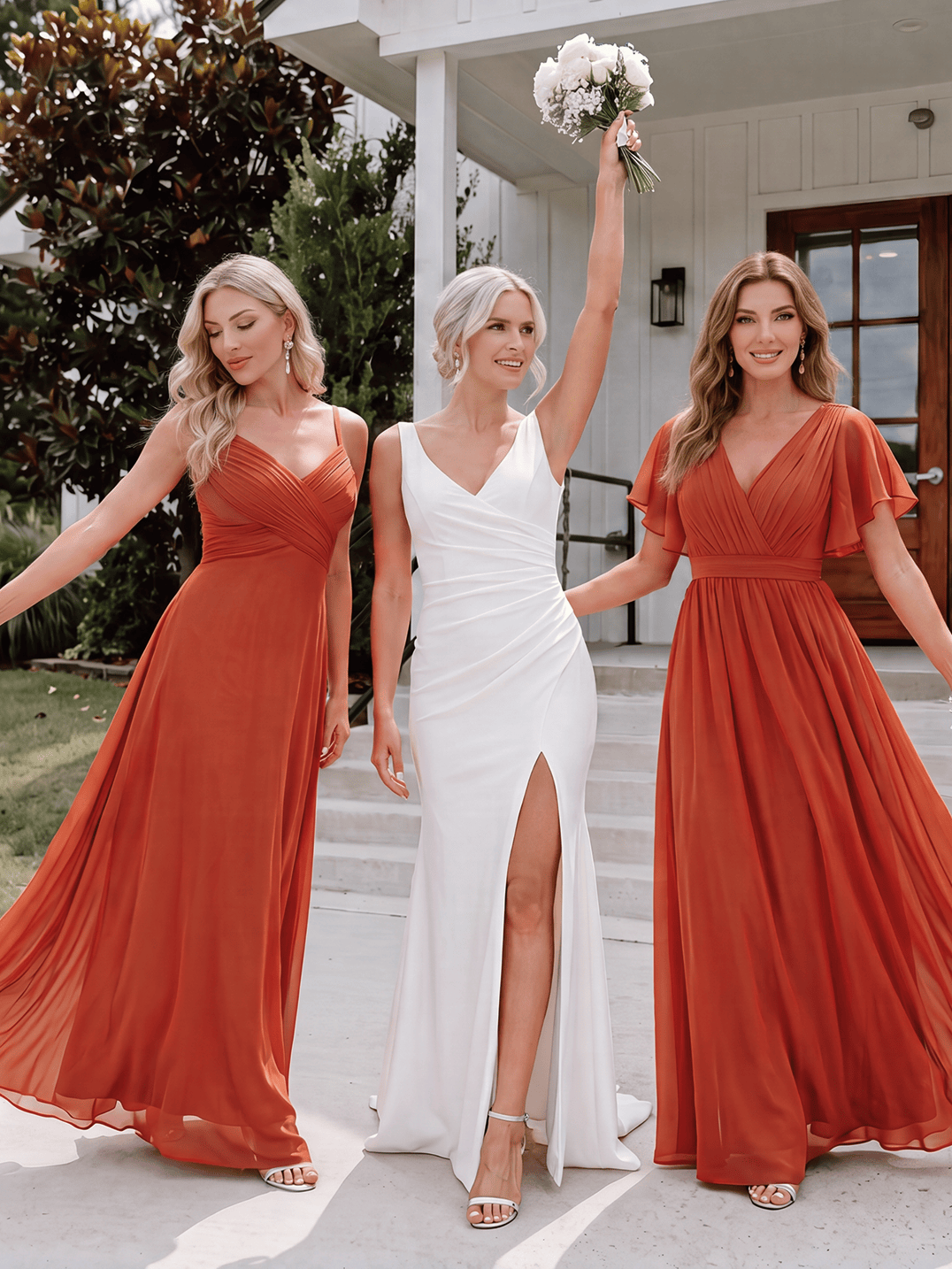
A guest in dark green won’t be mistaken for a bridesmaid in pale sage. A forest green dress won’t be confused with rust-coloured bridesmaid outfits. The green family is wide.
The real rule is simpler. If you know what the wedding party is wearing, don’t turn up in the same shade and a similar dressy shape. That’s it. Change the depth. Change the undertone. Change the fabric. Deep green and sage are clearly different. Olive and emerald are clearly different. The closer you get to their exact look, the more you’ll look like an accidental member of the bridal party.
If the invitation says don’t wear a certain colour, follow it. Otherwise, green is fine. A wedding palette sets the mood. It doesn’t mean every guest has to clear their wardrobe of anything vaguely related.
Make the final look feel finished, not over-styled
Green already does a lot of the talking. That’s the point. So you don’t need everything else shouting too.
Before you commit, look at the whole outfit. Not each piece on its own. Ask yourself three things:
- Where does your eye go first? If it lands on a shoe, a necklace or a bag instead of your face and the dress, something’s too loud. Dial it back.
- Will it read well in photos? Dark dresses, dark flowers, dark venue—you’ll need a pale bloom, a lighter background or a bit of metal to break it up. Otherwise it all merges into one.
- Can you actually wear it all day? A colour palette won’t save an outfit if the shoes pinch, the neckline keeps slipping, or the fabric creases the moment you sit down.
This last bit is where a popular colour becomes yours. It’s not about proving your green is more original than anyone else’s. It’s about making sure the shade, the fabric and the details work for your people, your venue and the kind of day you want.
Green bridesmaid dresses are popular because they really do work. Don’t write them off just because everyone else likes them too. Pick a shade with a reason. Give it a palette, not a formula. Let everything else support it. You’ll end up with something that feels current—not borrowed.